
C reative
Particle
Higgs
CPH Theory is based on Generalized light velocity from energy into mass.
CPH Theory in Journals
|
NASA Device Could Help Detect Cataracts
|
|
NASA Device Could Help Detect Cataracts
Researchers are studying the use of a NASA device that can be to test whether a cataract is developing before a patient’s vision begins to cloud over. The noninvasive test can determine if the eyes are losing the natural compound that keeps cataracts, a condition where the eye's normally clear lens becomes permanently clouded, at bay. Cataracts are currently the world’s leading cause of vision loss, and surgery to replace the lens is the only fix. Interestingly, the device also allows for easier testing of whether certain medications might slow or prevent cataracts from ever forming in the first place. Research involving astronauts, who are at an increased risk of the condition, and civilians could begin this year. Knowing their eyes are vulnerable to cataracts could spur people to alter their behavior to reduce their risk, such as avoiding cigarette smoke, improving diet and wearing sunglasses.
"It's like an early alarm system," Dr. Manuel Datiles III of the National Eye Institute, who led a study of 235 people that found the laser light technique can work, told the Associated Press. It all began when Rafat Ansari, a NASA senior scientist with the agency’s John Glenn Research Center in Cleveland, developed a low-powered laser light device to assist astronauts with experiments growing crystals in space. Ansari, an expert in physics, not medicine, began looking into the novel use of the device after his father developed cataracts. Surprised at the lack of options for those with the condition, Ansari read up on cataracts and learned that the lens primarily consists of proteins and water. One type of protein, alpha-crystallin, is critical to keeping the lens transparent. When other proteins get damaged, either by aging, cigarette smoke or the sun's UV radiation, the alpha-crystallins literally scoop them up before they can stick together and clog the lens. Humans are born with a certain amount of alpha-crystallin, but once the supply is depleted cataracts can form. Since his space laser measures proteins that make up crystals, Ansari thought, perhaps it could also spot cataract-related proteins. So he purchased calf eyes at a slaughterhouse, and enlisted his then-teenage daughter, now a doctor, to dissect the lenses in their kitchen. He placed them in the refrigerator, and tested them after the cold clouded the lens’ over. Although he didn’t know it at the time, biologists use the same technique to create models of human cataracts. When Ansari warmed up the lenses and beamed his device, he discovered that the light scattering differed with the lens' changing opacity. He then sought out eye specialists to see if the technique might be applicable in measuring levels of alpha-crystallin. While it took over ten years of testing, the result is a machine that does just that. It works by aiming Ansari's special laser at the lens for five seconds and then calculating light scattering. Researchers at the National Eye Institute tested 235 people ages 7 to 86, and found that alpha-crystallin decreased consistently both as lenses began to fog and as people with clear lenses aged. "What we are really looking at is the reserve of this alpha-crystallin," Ansari told the Associated Press. It can "repair any damage if there is a certain concentration. If it depletes below that level then I think the game is over,” he said. Researchers with NASA and NIH are now planning separate studies to see if special formulations of antioxidants, nutrients found in many fruits and vegetables that fight certain age-related tissue damage, can slow the loss of alpha-crystallin. Ansari also plans to measure the impact of long-term space travel on the vision of astronauts. Already, Datiles has used the device diagnose early stage cataracts in some patients whose doctors found no other reason for their worsening vision. At Hopkins, ophthalmologist Dr. Walter Stark is using the device to determine if some patients complaining that their LASIK surgery for nearsightedness is wearing off need may require more vision-sharpening surgery, or if they might instead be forming a cataract. The National Eye Institute study was published in last month's Archives of Ophthalmology. Source: Red orbit
1 2 3 4 5 6 7 8 9 10 Newest articles
|
|
Sub quantum space and interactions from photon to fermions and bosons |
Interesting articles
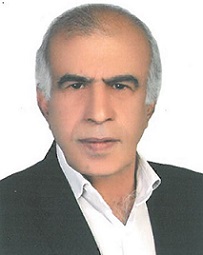
Since 1962 I doubted on Newton's laws. I did not accept the infinitive speed and I found un-vivid the laws of gravity and time.
I learned the Einstein's Relativity, thus I found some answers for my questions. But, I had another doubt of Infinitive Mass-Energy. And I wanted to know why light has stable speed?